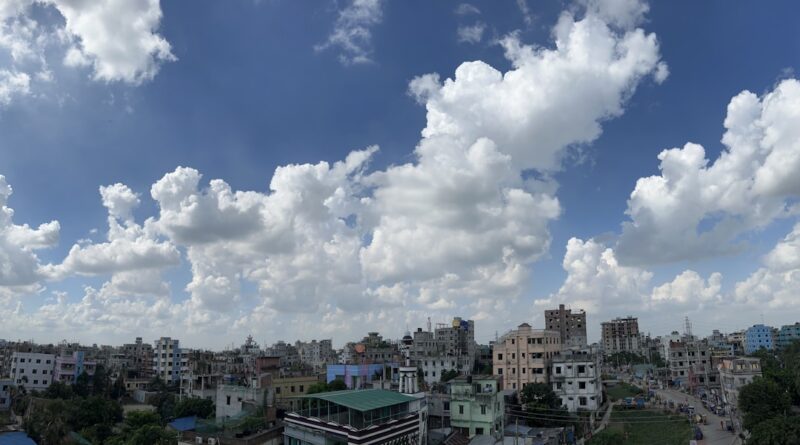
Bangladesh’s green buildings move past factory floors into offices and hospitals
LEED-certified design is spreading from Bangladesh’s garment factories into corporate offices and other non-factory buildings, with measurable energy and water savings still limited by a foreign rating system.
Today’s Progress
Bangladesh’s green-building push, long concentrated in export garment factories, is now appearing in corporate offices, financial institutions, and hospitals. According to Mongabay reporting on 24 August 2026 by Ibrahim Hossain Ovi, the U.S. Green Building Council (USGBC) lists 35 certified green buildings and sustainable offices in non-manufacturing sectors—and interest is still rising.
The factory base remains large. The Bangladesh Garment Manufacturers and Exporters Association (BGMEA) counts 290 LEED-certified ready-made garment (RMG) factories—125 platinum, 145 gold, and 16 silver—and Bangladesh holds 53 of the world’s top 100 highest-scoring LEED factories. Independent Bangladeshi business outlets reported the same 290-factory total after new certifications in mid-2026.
Examples outside the factory gate are concrete. MJL Bangladesh PLC’s Mobil House in Dhaka earned LEED platinum in October 2019. Director Tanjil Chowdhury told Mongabay the building uses rainwater harvesting, grey-water recycling, treated-water reuse, and a sewage treatment plant. He said efficient technologies cut energy use by roughly 30% versus conventional offices and water use by about 50%. Unilever Bangladesh’s corporate office earned LEED gold in 2023; HR director Syeda Durdana Kabir said the aim was to show that sustainability belongs in everyday office operations, not only manufacturing. Developer Shanta Holdings described maximizing daylight, sensor-based lighting and water systems, and disciplined cooling at 24°C (75°F).
Drivers cited by builders and managers include lower carbon emissions, resource efficiency, employee wellbeing, and corporate responsibility—under climate pressure in one of the world’s most flood- and heat-exposed deltas. Because Bangladesh’s electricity mix still relies heavily on fossil fuels, each unit of power saved also trims emissions at the source.
Why This Matters
Buildings lock in decades of energy and water demand. Spreading efficiency standards from export factories into ordinary workplaces can cut operating emissions and ease stress on groundwater and grids that already face climate and population pressure. Workers and office staff gain cooler, better-lit, better-ventilated spaces when designs meet LEED-type criteria.
What is demonstrated today is certification uptake and company-reported savings at specific sites. What remains possible—but not yet proven at national scale—is a deep cut in the building sector’s total emissions and water draw across cities, not only flagship towers.
Evidence and Context
Strengths: third-party LEED counts from USGBC and BGMEA; named buildings with certification dates; consistent 290-factory figure across Mongabay and local business press. Limits: non-factory stock is still only 35 certified projects; savings figures for Mobil House come from the operator, not an independent audit published in the Mongabay piece; LEED scores design and operations against a U.S.-origin framework. Trade-offs: high upfront cost slows smaller firms; export buyers help pull factories toward green labels, while domestic offices and hospitals lack the same market pressure.
Sajal Chowdhury, head of architecture at Chittagong University of Engineering and Technology, told Mongabay that LEED is the dominant tool but is “designed based on the US climate, construction materials and environment,” and that Bangladesh should build a rating system matched to local climate and materials. Experts also urged clearer national policy so green construction is not only a branding choice for large corporations.
What Made This Possible
Export-market demand for cleaner garment supply chains seeded a large LEED factory base over more than a decade. That experience—designers, contractors, and operators familiar with metering, water recycling, and efficiency targets—is now being applied to headquarters and commercial projects. Corporate sustainability commitments and competition for talent and reputation add a second push beyond buyer compliance.
Progress Toward Global Goals
Where certified buildings cut energy and water use, the development aligns with SDG 7 (Affordable and Clean Energy) through efficiency, SDG 12 (Responsible Consumption and Production) through resource management, and SDG 13 (Climate Action) by reducing demand on a fossil-heavy power system. Alignment is project-level, not a national building-stock transformation. No UDHR article is directly engaged by the certification counts alone.
Building on This Success
The following possibilities were generated with the assistance of AI to explore how this progress might be improved, expanded, or adapted. They are ideas for further investigation, not established findings or recommendations from the people featured in the original reporting.
A national green-building code tuned to monsoon humidity, cyclone wind loads, and local brick and bamboo supply could make efficiency the default for mid-rise housing, not only LEED showcases. Green public procurement for hospitals and schools would extend demand beyond export factories and multinationals. Low-interest retrofit finance for existing offices could multiply savings faster than waiting for new platinum towers.
How can Bangladesh turn factory-led green building success into standards that fit local climate, materials, and everyday buildings?
Lens 1 — Domestic rating system. Intervention: a Bangladesh Green Building Council-style rating weighted for heat, flooding, and local materials. Actor: housing and environment ministries with universities such as CUET. Mechanism: replace or complement LEED points that reward U.S.-centric materials with credits for passive cooling, raised plinths, and verified local low-carbon products. Obstacle: limited testing labs and industry resistance to a second standard. Measurable test: share of new commercial floor area certified under a local system within five years, plus measured kWh/m² and liters/person/day versus LEED-only peers.
Lens 2 — Public and mid-market buildings. Intervention: mandatory efficiency minimums for government offices and publicly funded hospitals. Actor: public works and health ministries. Mechanism: procurement rules that require metering, rainwater capture, and daylight standards already proven in LEED offices. Obstacle: capital budgets and weak enforcement. Measurable test: average energy intensity of new public buildings falling a set percentage against a 2026 baseline.
What Readers Can Watch
- Whether Bangladesh publishes a formal national green-building rating or code that experts say reflects local climate and materials.
- Growth in the USGBC non-manufacturing certified count beyond the current 35 projects, and any independent audits of energy and water savings.
- Policy or green-finance tools that lower upfront costs for smaller commercial and residential developers, not only large RMG groups.
What Readers Can Do
Readers following Bangladesh climate and cities news can track primary updates from Mongabay’s environment coverage and USGBC project directories, and support local journalism that verifies corporate efficiency claims against metered data.