Restored Guyana mangroves host fish communities like natural stands within 5 to 11 years
A peer-reviewed comparison along Guyana’s coast found planted mangroves aged 5 to 11 years already supporting fish communities much like nearby natural stands.
Today’s Progress
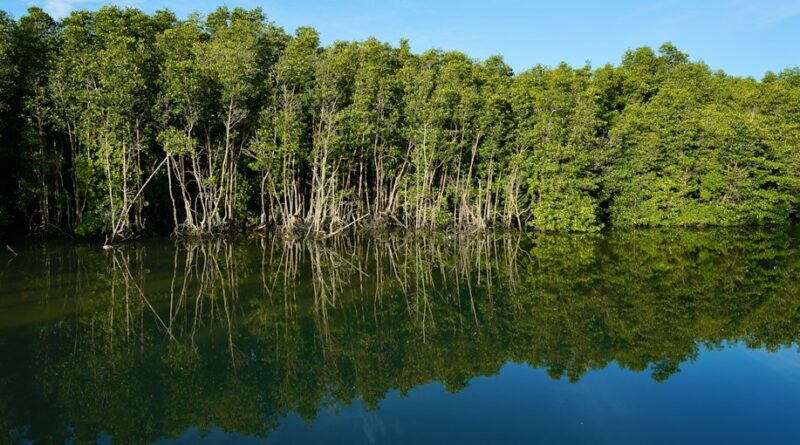
Guyana’s coastal mangrove programme planted more than 500,000 seedlings along roughly 8 kilometres of shoreline. A study published in Restoration Ecology later compared those restored forests—then five to 11 years old—with naturally regenerated mangroves of the same ages along the same coast.
Researchers reported no notable differences in fish abundance, species richness, or community composition between the planted and natural sites. The pattern is consistent with fish using the restored stands relatively quickly once habitat structure was in place.
The work sits against severe earlier loss of Guyana’s mangrove cover. Planting and natural regeneration have been part of the response to that contraction.
The peer-reviewed paper framing the fish comparison is titled “Restoring mangrove biodiversity: can restored mangroves support fish assemblages comparable to natural mangroves over time?” (Restoration Ecology). Coverage of the Guyana results appeared in late September 2026.
Why This Matters
Mangroves shelter juvenile and adult fish, stabilise muddy shores, and buffer waves. When cover collapses, those services shrink with it. Showing that deliberately planted stands can host fish assemblages comparable to natural ones within about a decade strengthens the case that restoration is not only about trees surviving—it can rebuild usable habitat for coastal food webs.
The current benefit is ecological equivalence on the measured fish metrics at the sampled Guyanese sites. Wider gains for fisheries landings, storm protection, or carbon storage are plausible extensions of healthy mangrove structure, but they are not what this study quantified.
Evidence and Context
Evidence stage: demonstrated for fish community similarity at the studied restored versus natural sites of matched age. Strengths include same-coast, same-age comparisons and standard assemblage metrics (abundance, richness, composition).
Limits remain. The planting footprint cited is about 8 km and half a million seedlings—not the entire former national mangrove estate. Results cover fish communities, not every mangrove function. Long-term trajectories past 11 years, effects of extreme storms, and site-to-site variation outside the sampled belt are not settled by one paper.
Trade-offs typical of coastal restoration—land-use pressure, sediment supply, and ongoing sea-level rise—still apply even when early fish recovery looks favourable.
What Made This Possible
Large-scale seedling planting under Guyana’s mangrove restoration programme created structural habitat where cover had thinned. Matching restored and naturally regenerated stands by age allowed a fair test of whether fish would recolonise planted forests on a similar timetable. Peer-reviewed ecological sampling then made the comparison public and comparable to other restoration science.
Progress Toward Global Goals
The demonstrated return of fish assemblages in restored mangrove habitat aligns with SDG 14 (Life Below Water), target 14.2 on protecting and restoring coastal ecosystems, and with SDG 15 (Life on Land) where mangrove forests are coastal terrestrial–aquatic systems. No UDHR article is directly evidenced by the fish metrics alone. Nothing in the reported results indicates the restoration undermines another SDG; unresolved coastal development pressure remains a separate risk to gains.
Building on This Success
The following possibilities were generated with the assistance of AI to explore how this progress might be improved, expanded, or adapted. They are ideas for further investigation, not established findings or recommendations from the people featured in the original reporting.
Pair restoration crews with fisheries cooperatives (editor suggestion). Coastal management agencies and village-level fisheries co-ops could formally assign joint monitoring routes so fishers and planters sample the same regenerating patches on a shared schedule. The mechanism would be repeated, low-cost counts of fish and crab catch-per-unit-effort inside restored polygons versus nearby natural reference stands, feeding a simple public dashboard. Obstacles include seasonal fishing calendars, gear differences, and trust over data use. A measurable test would be three consecutive years of co-collected CPUE and species lists showing whether restored patches track natural references within a pre-agreed similarity band—and whether co-op members report usable local harvest signals.
Expand age-matched fish surveys to additional coastal districts. University and government ecology teams could repeat the Restoration Ecology design at sites of different planting vintages and sediment types. Obstacle: boat time and taxonomic capacity. Test: publication of at least two additional matched-pair datasets within five years.
Link seedling survival maps to nursery-fish hotspots. If spatial planners overlaid successful planting blocks with known juvenile-fish concentrations, future plantings could prioritise corridors that close gaps between remnant natural stands. Obstacle: incomplete bathymetry and access rights. Test: fraction of new plantings sited within a defined distance of documented nursery areas, plus follow-up assemblage checks at year five.
How quickly did Guyana’s planted mangroves regain fish communities comparable to natural stands?
Within five to 11 years of planting, restored forests along the studied Guyanese coast showed no notable differences from same-age natural mangroves in fish abundance, species richness, or community composition, according to the Restoration Ecology comparison reported in 2026 coverage. That timetable is shorter than many assumptions about full ecological recovery and is specific to the fish metrics and sites sampled—not a universal guarantee for every mangrove function or country.
Three Promising Next Steps
- Institutionalise joint fisher–restoration monitoring on regenerating plots (as above).
- Replicate age-matched fish assemblage surveys beyond the original 8 km belt.
- Publish open seedling-survival and survey data so other muddy-coast nations can benchmark recovery speed.
What Readers Can Watch
- Follow-up papers citing the Restoration Ecology Guyana fish-assemblage study, including longer age classes.
- Official updates from Guyana’s mangrove management bodies on hectares retained versus lost.
- Whether local fishery statistics near restored belts are collected in ways that can be compared with the ecological surveys.
What Readers Can Do
Readers seeking primary detail can read the Restoration Ecology article on restored versus natural mangrove fish assemblages and the Times of India science report summarising the Guyana planting and results. Support for local conservation groups working on Guiana Shield coasts is best verified through those organisations’ own current appeals.