UNEP reports methane cuts equal to 26 million cars as nations close major leaks
At COP31 in Antalya, UNEP announced that satellite-guided leak fixes have cut methane emissions equivalent to taking 26 million cars off the road for a year.
Today’s Progress
On 12 November 2026 in Antalya, Türkiye, the United Nations Environment Programme announced concrete methane reductions as governments gathered for COP31 climate talks. Methane emissions addressed through the International Methane Emissions Observatory’s Methane Alert and Response System (MARS) equal taking 26 million cars off the road for a year, UNEP said in a press release.
MARS uses satellites, artificial intelligence and scientific review to spot large plumes and alert governments and operators. Since June 2026, five new major sources have been mitigated in Canada, Iraq, Kazakhstan and Mexico. Those cases alone addressed about 125,000 tonnes of methane—climate impact equal to nearly 2.5 million cars driven for a year. They raise the MARS total to 46 major sources across 13 countries.
UNEP has also expanded support so countries can hit an 80 per cent response rate to major alerts by 2030. Since June, Azerbaijan, Canada, Iraq and Libya reached that benchmark, bringing the total to 13 countries; nine now respond to every major alert.
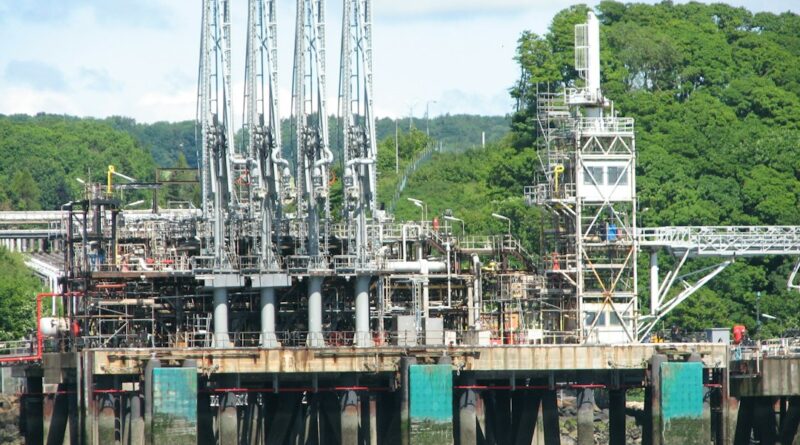
In parallel, UNEP’s Oil and Gas Methane Partnership 2.0 has grown to 164 companies covering 43 per cent of global oil and gas production, with ten new members in 2026. About one-third of global production is on track for the partnership’s Gold Standard of measurement-based reporting and mitigation, and the share at the highest data-quality level has doubled year over year.
The announcement came at an IMEO ministerial meeting co-hosted by Canada and the European Union on the sidelines of COP31. It builds on the UN Secretary-General’s Call to Action on Methane issued in June 2026, which set nine priority actions across fossil fuels, waste and agriculture in support of the Global Methane Pledge’s 30 per cent cut by 2030.
Why This Matters
Methane drives roughly one-third of current global warming and is far more potent than carbon dioxide over short timescales. Because many large leaks can be found and fixed relatively quickly, cutting methane is among the fastest available brakes on near-term temperature rise. Verified mitigations of 46 major sources, rising national response rates, and broader industry measurement all translate satellite data into fewer tonnes of a powerful greenhouse gas reaching the atmosphere—benefits that accrue to people and ecosystems facing heat, extreme weather and air-quality harms.
Evidence and Context
The 26-million-car figure is UNEP’s own climate-equivalence conversion of methane addressed through MARS, not an independent inventory audit. “Addressed” means confirmed mitigation of detected major sources; it does not yet cover the full global methane budget from agriculture, waste or smaller leaks. Coverage remains concentrated in a limited set of countries and large plumes. OGMP 2.0 growth improves transparency for a large share of production; the source does not report that a majority of global production has reached the highest data-quality level. The work supports the Global Methane Pledge but does not by itself deliver the full 30 per cent reduction target.
What Made This Possible
Satellite detection paired with rapid national and operator alerts, UNEP technical support through IMEO and the Climate and Clean Air Coalition, the June 2026 Call to Action, and a voluntary industry reporting framework that rewards measurement-based mitigation have supported detection, response, coordination, and reporting.
Progress Toward Global Goals

The verified emission cuts and improved measurement align with SDG 13: Climate Action by reducing a major short-lived climate pollutant. Cleaner operations that limit methane and associated pollutants can also support SDG 3: Good Health and Well-being where local air quality improves, though health outcome data are not yet reported for these specific cases. No UDHR article is directly implicated.
Building on This Success
The following possibilities were generated with the assistance of AI to explore how this progress might be improved, expanded, or adapted. They are ideas for further investigation, not established findings or recommendations from the people featured in the original reporting.
If more governments matched the nine countries already at 100 per cent alert response, MARS coverage could expand beyond the current 13 nations; UNEP and IMEO could pair capacity grants with public response-rate dashboards, though data-sharing rules and operator liability concerns remain obstacles—success would show as additional countries crossing the 80 per cent threshold before 2030. Extending measurement-based standards from OGMP 2.0 into waste and agriculture, where the Call to Action also focuses, could multiply tonnes avoided if ministries and large emitters adopt comparable reporting; fragmented regulation is the main barrier, testable by the number of non-energy facilities publishing verified methane inventories. Pairing MARS plume data with independent ground sensors in high-alert basins could reduce false negatives and speed repairs; funding and site access would need to be secured, with the measurable test being shorter average time from detection to confirmed mitigation.
How did satellite alerts and industry reporting turn major methane leaks into verified cuts equal to millions of cars?
MARS detects large plumes from space, notifies governments and operators, and tracks whether the source is fixed; five new cases since June 2026 in Canada, Iraq, Kazakhstan and Mexico added 125,000 tonnes addressed. OGMP 2.0 simultaneously raises the share of global production under measurement-based reporting, creating pressure and tools to prevent and repair leaks. Together they convert detection into documented climate benefit rather than leaving plumes untracked.
Three Promising Next Steps
- Publish annual country-level MARS response rates and mitigation tonnes so lagging governments face transparent benchmarks.
- Bring additional major producers into OGMP 2.0 Gold Standard pathways so measurement coverage exceeds the current one-third of production.
- Pilot rapid-response repair funds in basins that repeatedly generate alerts, tying disbursement to verified plume disappearance.
What Readers Can Watch
- Whether the number of countries at or above 80 per cent MARS response continues to rise past 13.
- Growth in OGMP 2.0 membership and the share of production at Gold Standard data quality.
- Follow-on UNEP or IMEO tallies of cumulative methane tonnes addressed after COP31.
What Readers Can Do
Follow UNEP IMEO and MARS updates for new case studies and response-rate figures. Support or scrutinize national methane action plans tied to the Global Methane Pledge in your country.