RMMA’s Fluorine Free Firefighting Foam Milestone
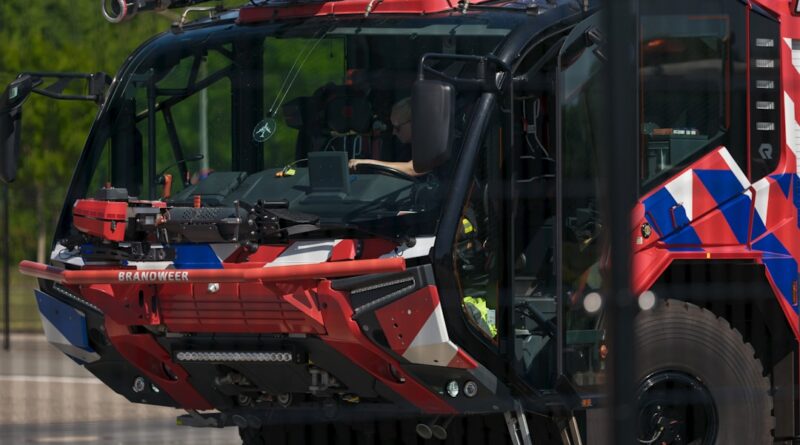
Rocky Mountain Metropolitan Airport has completed a switch to fluorine free firefighting foam on both of its Aircraft Rescue and Fire Fighting vehicles, replacing legacy PFAS foam with an FAA-approved alternative.
Rocky Mountain Metropolitan Airport (RMMA) in Jefferson County, Colorado, finished the change on July 22, 2026. Jefferson County announced the milestone on July 29. Both Aircraft Rescue and Fire Fighting (ARFF) trucks now carry fluorine-free foam, known as F3, instead of aqueous film-forming foam (AFFF).
AFFF has long been standard for jet-fuel fires at airports, but it contains per- and polyfluoroalkyl substances (PFAS). The new foam is a next-generation product the Federal Aviation Administration has approved for aircraft rescue and firefighting. County officials say the airport can keep the same emergency-response standards while supporting wider efforts to cut PFAS foam use.
The foam step follows another environmental move at RMMA. In February 2026 the airport began offering UL94 unleaded aviation gasoline, an FAA-approved fuel with no lead that works in about two-thirds of the piston-engine aircraft based there. Together, the fuel and foam changes sit inside a broader push for responsible operations and continuous improvement, the county said, without sacrificing safe service for pilots and the public.
What would it take for more U.S. airports to follow RMMA’s foam switch?
RMMA’s completed transition shows what is already possible under current federal rules. After the Department of Defense published a military specification for F3 in January 2023 and began listing qualified products, the FAA treated those foams as acceptable for Part 139 airport firefighting. Congress had directed the agency to plan an orderly move away from AFFF. Airports can now buy certified F3, and federal support includes a PFAS Replacement Program with grants of up to $2 million to help cover the switch.
Scale still depends on money, logistics, and training. Transition work often includes buying new foam, storing or disposing of leftover AFFF under EPA and state rules, cleaning or modifying equipment, and retraining crews because F3 behaves differently from film-forming foam. One Minnesota Department of Transportation estimate put full transition costs at roughly $2.7 million for each of that state’s eight Part 139 airports; larger hubs have projected tens of millions. Some states are adding pressure of their own: Washington, for example, barred manufacturers from selling AFFF to Part 139 airports in the state as of September 30, 2025, with limited extensions.
Data that would clarify the national picture include how many Part 139 airports have finished F3 conversions, average cost per airport size, and post-transition drill performance. RMMA’s two-vehicle change is a clear local proof point. If grant uptake rises and more airports publish timelines, the same FAA-approved path could spread from general-aviation fields to major hubs—cutting future PFAS releases while keeping rescue capability intact.
Readers can watch for more county and airport announcements, FAA guidance updates, and grant awards that turn early movers like RMMA into a wider pattern of cleaner airport firefighting.
Source: Jefferson County / Rocky Mountain Metropolitan Airport (jeffco.us)