North Philly Garden Offers Cool Refuge and a Climate Model
In Nicetown-Tioga, the long-tended Tioga-Hope garden creates a cooler microclimate and gathering place where heat risk is among the city’s highest.
Today’s Progress
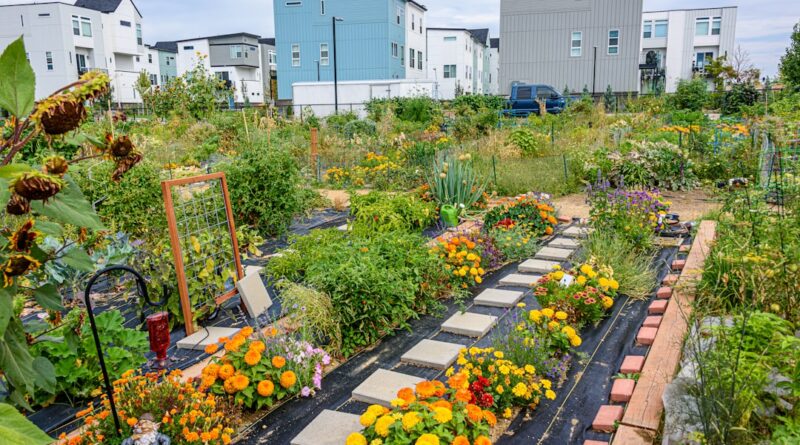
In North Philadelphia’s Nicetown-Tioga neighborhood, the Tioga-Hope Park and Garden stands out from the hotter streets around it. Trees, open lawn, flower beds, vegetables, and fruit trees form a cooler pocket of green on a quiet corner—what Spotlight PA describes as a cooler “microclimate” and a lively social space.
Neighbor Estelle Vaughn has tended the garden for more than 25 years from her home overlooking the lot. The surrounding area scores “very high” on Philadelphia’s Heat Vulnerability Index. About 42 percent of residents live below the poverty line, and many older adults live alone—factors that raise heat-related risk. Temperatures nearby run higher than in shadier parts of the city. Inside the garden, canopy and lawn work together to cool the immediate environment, cut some community health risks tied to extreme heat, and give people a place to meet outdoors.
The Pennsylvania Horticultural Society (PHS) has supported Tioga-Hope since 2015. Citywide, PHS’s LandCare Program—launched in 1999—cleans and greens vacant parcels with local contractors: trash removal, grass, low fences, mowing, and in some cases trees or pollinator plantings. LandCare now maintains about 12,000 of the city’s estimated 40,000 vacant lots. Each year PHS also partners with the city and volunteers to plant thousands of trees and convert hundreds more lots into cared-for green space. Creating more places like Tioga-Hope is central to that work, Spotlight PA reports.
A 2018 study cited in the same reporting found a 29 percent drop in gun violence and a 13 percent drop in overall crime near transformed lots. Nearby residents reported feeling less afraid outdoors and more willing to use green space to socialize. PHS president Matt Rader has described greened lots as places where people barbecue, set out chairs, and let children play—land that once hurt neighborhood life now helping people gather.
In June, then–U.S. Surgeon General Vivek Murthy visited Tioga-Hope on a listening tour focused on community connection, underscoring gardens and parks as “social infrastructure” linked to health.
Why This Matters
Extreme heat is becoming more frequent. Neighborhoods with less tree cover, lower incomes, and more isolated older adults face higher risk of heat illness and death. A maintained garden does not replace citywide cooling policy, but it delivers local shade, evaporative cooling from plants and soil, and a reason for neighbors to check on one another outside.
The benefit is dual: physical relief on hot days and stronger informal support networks. That combination is especially relevant where air-conditioning access is uneven and vacant lots have long concentrated blight. Tioga-Hope shows what sustained neighbor stewardship plus institutional greening can produce on a single corner—and why scaling similar sites is framed as climate adaptation, not only beautification.
Evidence and Context
The core evidence for Tioga-Hope’s cooling role is observational and place-based: Spotlight PA’s on-the-ground reporting, the neighborhood’s Heat Vulnerability Index ranking, and the contrast between the garden’s canopy-lawn design and hotter surrounding blocks. Public figures for a precise temperature drop at this site were not included in the available reporting, so the microclimate claim should be read as qualitative but grounded in well-known urban greening physics and local conditions.
Broader LandCare outcomes rest on stronger quantitative ground. Peer-reviewed and widely reported research on Philadelphia’s cleaned-and-greened lots has linked the treatment to large relative reductions in gun violence and to mental-health gains for nearby residents; separate work has associated greened lots with higher nearby property values. Those studies evaluate the program model, not every individual garden’s heat metrics. Trade-offs remain: LandCare cannot fully control privately owned lots, maintenance needs continue, and one garden cannot offset citywide heat inequity alone.
What Made This Possible
Long-term care by residents such as Vaughn built the garden’s depth over decades. PHS support since 2015 added horticultural capacity and a link to the larger LandCare pipeline. City permission to access vacant land, local contractors for clean-and-green work, and a research culture that tested greening’s public-safety and health effects all reinforced the model. National attention to loneliness and social infrastructure—highlighted by Murthy’s visit—has also elevated parks and gardens as health assets.
Progress Toward Global Goals
The work aligns defensibly with SDG 11 (Sustainable Cities and Communities) by expanding safe, inclusive green public space in a dense neighborhood, and with SDG 13 (Climate Action) as local adaptation that reduces heat exposure where vulnerability is high. It supports SDG 3 (Good Health and Well-being) insofar as cooler outdoor space and social connection address documented heat and isolation risks; the article does not claim measured reductions in heat deaths at this single site. No SDG is clearly undermined.
Building on This Success
The following possibilities were generated with the assistance of AI to explore how this progress might be improved, expanded, or adapted. They are ideas for further investigation, not established findings or recommendations from the people featured in the original reporting.
Targeted heat monitoring could turn Tioga-Hope’s qualitative microclimate into a shared learning site: community groups and university partners might place low-cost sensors in the garden and on adjacent streets for one summer, publish open temperature and humidity series, and test whether canopy density or lawn irrigation schedules change peak afternoon readings. Obstacle: funding and data stewardship. Measurable test: documented °F difference and hours above dangerous heat thresholds across paired locations.
City agencies could prioritize LandCare and tree planting on blocks that score “very high” on the Heat Vulnerability Index and lack nearby cooling centers, bundling greening with cooling-center wayfinding. Obstacle: lot ownership and multi-year maintenance budgets. Measurable test: share of very-high-index census tracts within a short walk of maintained green space after a set funding cycle.
Neighbor-led gardens might pair produce growing with formal heat-check routines for older adults living alone during heat alerts, using the garden as a daily outdoor meeting point. Obstacle: volunteer capacity and privacy. Measurable test: number of consented check-ins completed during official heat warnings without displacing gardening time.
How does a North Philadelphia community garden turn vacant land into heat relief for a high-vulnerability neighborhood?
It does so through layered, long-running action: residents reclaim and tend a corner lot; trees and lawn create shade and a cooler microclimate; PHS and city-linked LandCare stabilize vacant land citywide; and the resulting space doubles as social infrastructure so people gather outdoors where isolation and heat risk otherwise compound. The demonstrated piece is the living garden and the LandCare evidence base around safety and use of outdoor space. The heat-relief mechanism at Tioga-Hope is real in design and local description; finer temperature measurement would strengthen the climate-adaptation case for replication.
Three Promising Next Steps
- Instrument high-vulnerability gardens — Local universities and PHS could add simple heat sensors at Tioga-Hope and comparison lots to quantify cooling hours for residents and planners.
- Heat-index targeting — City and PHS could rank remaining vacant lots by Heat Vulnerability Index when choosing spring and fall LandCare sites.
- Steward stipends — Fund modest stipends or tool banks for long-term gardeners like Vaughn so canopy and beds survive leadership transitions.
What Readers Can Watch
- Whether Philadelphia expands LandCare or tree-planting quotas in Nicetown-Tioga and other very-high heat-vulnerability tracts.
- Publication of any local temperature monitoring tied to community gardens or greened lots.
- Follow-up from PHS and city partners on how many new lots receive trees or pollinator plantings each season.
- Community reports on garden use during future heat waves—who visits, and whether older neighbors use the shade.
What Readers Can Do
- Read the full Spotlight PA feature and support independent local reporting: spotlightpa.org.
- Learn about PHS greening and volunteer or land-care opportunities via the Pennsylvania Horticultural Society.
- In your own city, ask planning or parks agencies how vacant-lot greening is prioritized against official heat-vulnerability maps.