Roman Space Telescope Launches Nine Months Early After Surviving Budget Threats
NASA’s Nancy Grace Roman Space Telescope lifted off on 30 August 2026, completing a public science mission that Congress repeatedly shielded from cancellation and that teams finished months ahead of its formal deadline.
Today’s Progress
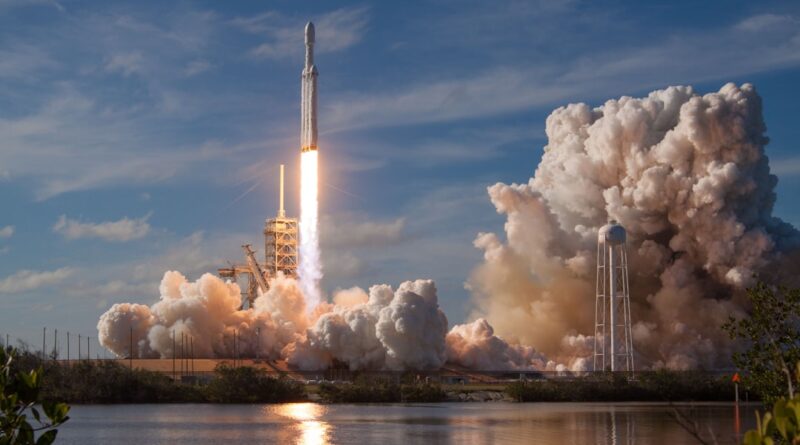
On Sunday morning, 30 August 2026, a SpaceX Falcon Heavy rose from Launch Complex 39A at NASA’s Kennedy Space Center in Florida at 7:26 a.m. EDT, carrying the Nancy Grace Roman Space Telescope. Within about half an hour the observatory separated cleanly from the upper stage. Solar arrays deployed, and controllers established communications through the Deep Space Network station in Canberra, Australia. The spacecraft is now on a roughly three-month cruise to an orbit near the Sun-Earth Lagrange Point 2, about one million miles (1.5 million kilometers) from Earth—the same neighborhood occupied by the James Webb Space Telescope.
The flight closed a long political and technical chapter. As Wide Field Infrared Survey Telescope (WFIRST) and later under its current name, the project faced three White House proposals for outright termination in fiscal years 2019, 2020, and 2021, plus a fourth major funding reduction late in construction during the fiscal 2026 process. Each time, Congress restored support. SpaceDaily’s pre-launch account and reporting from Reuters, The Guardian, and SpacePolicyOnline document that pattern of protection. NASA’s formal launch-readiness date had been May 2027; hardware finished early enough that Launch Services and SpaceX could fly nearly nine months ahead of that mark. SpacePolicyOnline puts the mission cost, including five years of operations, at $4.3 billion and notes NASA now describes the project as on budget.
Named for NASA’s first chief of astronomy—often called the “Mother of Hubble”—Roman is designed as a wide-field infrared surveyor that complements Hubble’s and Webb’s sharper, narrower views. NASA science leaders say its field of view is on the order of 100 times Hubble’s in a single frame, with survey speeds far higher than earlier flagships. Primary goals include mapping dark energy and dark matter, cataloguing exoplanets across the Milky Way, and imaging billions of galaxies. A five-year prime mission is planned, with fuel margins that could support a decade or more of operations.
Why This Matters
The immediate benefit is concrete: a major public observatory that the U.S. astronomy community ranked as its top large-space priority in the 2010 decadal survey is no longer trapped on the ground. Data from Roman will be open to researchers worldwide. That expands shared capacity to study how the universe expands, how galaxies assemble, and how common planetary systems are—questions that no single lab or nation can settle alone.
What has not yet happened is science return. First images are expected only after the multi-month cruise and a commissioning period, with NASA pointing toward early 2027 for initial public releases. The launch removes construction and ascent risk; optical performance, thermal stability, and survey quality still have to be proven at L2.
Evidence and Context
Multiple independent outlets—including Reuters, PBS, Sky & Telescope, SpacePolicyOnline, and NASA’s own launch materials—confirm liftoff time, vehicle, clean separation, power deployment, and DSN lock. SpaceDaily and congressional budget histories detail the three termination proposals and the later funding cut that Congress offset. A July 2026 Government Accountability Office assessment, cited in SpaceDaily’s launch wrap-up, had already flagged August readiness earlier than prior October planning.
Limits remain clear. Scientific discoveries are still ahead, not demonstrated. SpacePolicyOnline records that earlier “under budget” language has been walked back to “on budget.” Mission life beyond five years depends on fuel, hardware health, and any future servicing concepts; the spacecraft is designed to be refuelable, but no refueling capability yet exists at L2. Broader NASA science budgets continue to face pressure in subsequent fiscal requests, even as this particular mission cleared the pad.
What Made This Possible
Stable, multi-year appropriations after each cancellation attempt allowed NASA and industry partners to keep specialist teams, long-lead hardware, and integration lines intact. Parallel construction, intensive testing—including full environmental tests completed in spring 2026—and schedule margin that survived pandemic disruption and a 2025 appropriations lapse (when integration work received excepted status) all contributed. When hardware finished early, managers pulled the launch date forward rather than wait for the formal readiness window.
International and institutional partners also matter: Goddard leads management, with contributions involving JPL, Caltech/IPAC, the Space Telescope Science Institute, industrial partners, and agencies including ESA, JAXA, CNES, and Germany’s Max Planck Institute for Astronomy, according to NASA’s launch release.
Progress Toward Global Goals
The mission aligns with Article 27 of the Universal Declaration of Human Rights, which recognizes the right to share in scientific advancement and its benefits: Roman’s survey data are intended for the global research community, not a closed proprietary archive. On the SDG side, the project strengthens SDG 9 (Industry, Innovation and Infrastructure) by delivering large-scale public scientific infrastructure on an accelerated schedule. No SDG is clearly undermined by the launch itself; the main trade-off is opportunity cost within constrained civil-science budgets, which is a policy choice rather than an environmental or rights harm from the telescope.
Building on This Success
The following possibilities were generated with the assistance of AI to explore how this progress might be improved, expanded, or adapted. They are ideas for further investigation, not established findings or recommendations from the people featured in the original reporting.
If commissioning confirms survey speed and stability, archive operators and education networks could pair early public data releases with structured citizen-science pipelines so non-specialists help flag rare transients while professional teams focus on cosmology samples. Space agencies that already contribute hardware or analysis could test joint “rapid-response” follow-up agreements linking Roman detections to ground-based and Webb observations within days rather than months. Separately, mission planners might study whether the refuelable design can be matched to a small demonstration tanker concept before the primary fuel margin is exhausted, extending the statistical power of dark-energy and exoplanet samples—subject to cost, debris, and technology readiness hurdles that would need independent review.
How did the Nancy Grace Roman Space Telescope reach space nine months early after repeated cancellation attempts?
Congressional refusal to accept three successive termination proposals and a later deep cut kept funding continuous enough for teams to finish hardware ahead of the May 2027 readiness date. That political continuity alone does not explain the early flight: engineers ran intensive integration and test campaigns, completed environmental testing by April 2026, shipped the observatory to Kennedy in June, and worked with Launch Services and SpaceX to seize an August 2026 Falcon Heavy slot. The result is a rare flagship story in which schedule margin was converted into an earlier launch rather than consumed by delay.
Three Promising Next Steps
- Commissioning transparency — NASA and the Space Telescope Science Institute could publish a public milestone board (trajectory burns, instrument cooldown, first-light criteria) so researchers and educators can plan around verified dates rather than rumors; success metric: dated checklist items updated within 48 hours of each gate.
- Open early-release fields — After calibration, designate a few sky patches for immediate public release with plain-language guides; success metric: downloadable catalogs and image cutouts used by a documented set of classroom or citizen-science projects within six months of first light.
- Cross-observatory follow-up drills — Run timed exercises that pass simulated Roman alerts to Webb and major ground networks; success metric: median time from alert to scheduled follow-up observation under an agreed threshold.
What Readers Can Watch
- Mid-course correction burns and arrival at the L2 operational orbit over the coming months.
- End of the roughly 90-day commissioning period and NASA’s first public image release, currently pointed toward early 2027.
- Early survey statistics on supernovae, microlensing planet candidates, and galaxy counts once wide-field operations begin.
- Whether subsequent NASA science appropriations sustain operations and data analysis after the five-year prime mission.