Independent CSIRO analysis confirms the ring in the first black hole image
An independent team at Australia’s national science agency has reprocessed the original Event Horizon Telescope (EHT) observations of the black hole at the centre of galaxy M87 and recovered the same bright ring first released in 2019. The work, led by CSIRO researchers and published in Nature in November 2026, answers a years-long debate over whether that iconic doughnut shape was a real feature or an artefact of how sparse radio data were turned into a picture.
Today’s Progress
In April 2019 the EHT Collaboration published the first image of a black hole’s shadow: a dark central region ringed by emission from hot gas around the supermassive object in M87, about 55 million light-years away. The ring’s size matched expectations for a black hole of roughly 6.5 billion solar masses seen nearly face-on, supporting Einstein’s general relativity.
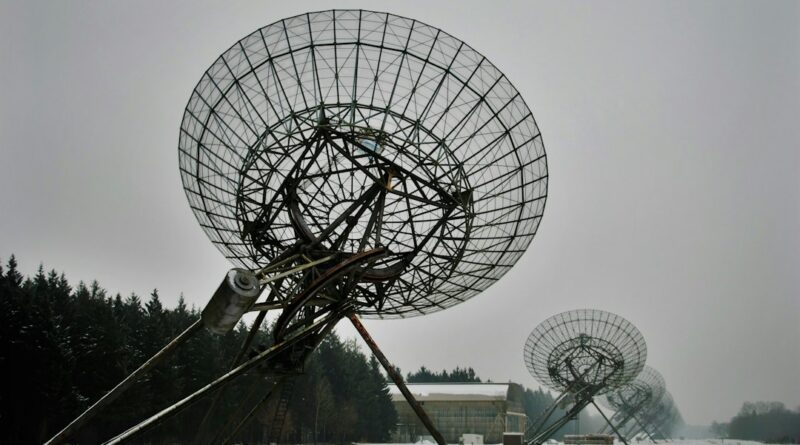
Because only a handful of radio telescopes worldwide contributed, the measurements left large gaps. Imaging algorithms had to fill those gaps, and atmospheric distortion at short radio wavelengths complicated calibration. From 2022, Junichiro Makino of Kobe University and collaborators argued that different assumptions could produce a blob of emission rather than a clean ring, raising the possibility that the famous shape was processing-dependent.
A four-person CSIRO group—Samuel Lai, Nithyanandan Thyagarajan, O. I. Wong and F. Diakogiannis—built a different pipeline. They used mathematical constructs known as closure invariants, grouping telescopes in threes to cancel atmospheric and instrumental errors, together with machine-learning methods trained without any black-hole images. A complementary traditional statistical method produced the same structure. Across the public EHT datasets from April 2017, the ring’s diameter and overall orientation matched the original EHT result. Fine details of ring width and brightness along the circumference differ slightly, but the overall morphology holds.
“Importantly, our model had no idea what a black hole looked like when we applied it to the M87 data,” Lai said in a CSIRO statement. Thyagarajan noted that sparse global coverage and atmospheric distortion had long forced heavy reliance on imaging assumptions; the new approach was designed to reduce those biases.
Why This Matters
The 2019 image was widely treated as important observational evidence consistent with general-relativistic models of spacetime near the M87 black hole and supportive of the idea that galaxy centres host supermassive black holes. Independent confirmation that the ring is not an artefact of one collaboration’s pipeline strengthens that evidence. It also models healthy scientific practice: contested results are re-examined with different tools, and agreement across methods raises confidence more than any single announcement can.
Evidence and Context
The primary evidence is the peer-reviewed Nature paper (DOI 10.1038/s41586-026-11241-9) and parallel reporting by CSIRO, The Conversation, Nature news, New Scientist and Phys.org. The reconstructed images are described as nearly identical in size and shape to the EHT originals, with residual differences in fine structure openly noted. Limits remain: the data are still sparse, the object is unresolved in detail, and future arrays or wavelengths could refine the picture further. The study does not claim to settle every open question about black-hole astrophysics; it addresses the specific charge that the ring itself was an imaging artefact.
What Made This Possible
Public release of the EHT 2017 visibility data allowed outsiders to reanalyse the same measurements. The development of closure-invariant observables and machine-learning tools that avoid black-hole priors made an independent test feasible.
Building on This Success
The following possibilities were generated with the assistance of AI to explore how this progress might be improved, expanded, or adapted. They are ideas for further investigation, not established findings or recommendations from the people featured in the original reporting.
If other groups applied the same closure-invariant and prior-free pipeline to later EHT campaigns, including the Galactic Centre black hole Sagittarius A*, consistency across targets could be checked under a shared open protocol. Expanded telescope networks that shrink the gaps in Earth-sized interferometry would reduce the need for any algorithm to invent missing baselines; a measurable test would be lower scatter in ring diameter across independent pipelines on the same night’s data. Training materials that walk students through both the EHT and CSIRO reconstructions side by side could turn a high-profile dispute into a case study in how imaging assumptions are tested.
How did an independent CSIRO reanalysis confirm the ring in the first black hole image?
By rebuilding the image from the public EHT measurements with methods that cancel many calibration errors and that were never shown a black-hole picture, the CSIRO team recovered a ring whose diameter and orientation match the 2019 result—evidence that the structure is in the data, not only in one reconstruction recipe.
Three Promising Next Steps
- Open multi-pipeline challenges — Archive maintainers and EHT partners could host blinded reprocessing contests on each new public release; success would be scored by agreement on ring diameter and orientation across teams that never share code.
- Prior-free tests on Sagittarius A* — Applying the CSIRO-style observables to the more variable Galactic Centre source would test whether the method generalises when the target changes on short timescales.
- Baseline-density upgrades — Adding more stations at complementary longitudes would cut the fraction of the Fourier plane that algorithms must invent, measurable as reduced method-to-method scatter.
What Readers Can Watch
- Whether follow-up papers apply the same independent observables to other EHT targets and epochs.
- How ring-parameter uncertainties shrink as new stations join the global array.
- Whether the residual differences in ring width and brightness become scientifically informative rather than dismissed as noise.